The filmmakers.
Read about the film’s writer, director, cinematographer, editor, composer and publicity team.
The creative team.
Writing, direction, cinematography, editing and music.
Writer · Director · ProducerJames Hill
James Hill
James Hill is the writer, director and producer of The Streetsweeper, an independent feature born from his belief that powerful films can entertain while confronting larger questions about family, sacrifice, humanity and the world around us.
Hill’s path to filmmaking is as unconventional as the stories he has pursued. After serving in Vietnam, he earned his law degree in 1973 and went on to work in real estate development, business and investment banking before turning his attention to screenwriting and motion-picture production.
His Hollywood journey took a major step forward in the early 1990s when Hill secured the rights to develop a new motion-picture adaptation of Ayn Rand’s landmark novel The Fountainhead. The project brought Hill into a production relationship with Warner Bros., the studio behind the original 1949 film starring Gary Cooper and Patricia Neal. Contemporary industry coverage reported Hill’s acquisition of the rights, while architectural press reported that Hill and Warner Bros. were working on the planned remake.
Hill worked to develop a screenplay that would remain faithful to Rand’s novel and its themes of individualism, conviction and refusing to compromise one’s vision—ideas that would continue to resonate throughout his work as a filmmaker.
That independent spirit ultimately led Hill to create The Streetsweeper, serving as its writer, director and producer. Set against the streets of San Diego, the film combines an intimate father-and-son story with opera, Italian-American heritage, sacrifice and a stark portrait of people living on society’s margins.
The Streetsweeper earned Best Picture (English Language) at the Italian Film Awards and received nominations for Best Feature, Best Director and Best Screenplay at the 2003 Arpa International Film Festival in Los Angeles.
More than two decades later, Hill has returned to The Streetsweeper at a moment when the social issues captured in the original film have become even more visible. What began as an independent film about one father, one son and one man’s determination to make a difference now carries an unexpected relevance.
For James Hill, The Streetsweeper is more than a film rediscovered.
It is a story whose time has finally arrived.
Director of Photography · American Society of CinematographersDenis Maloney, ASC
Denis Maloney, ASC
Denis Maloney, ASC is an accomplished American cinematographer whose extensive career spans feature films, television and independent cinema.
A member of the prestigious American Society of Cinematographers, Maloney has accumulated more than 125 cinematography credits, bringing a distinctive visual style and decades of filmmaking experience to productions across Hollywood and independent film.
His credits include work on the Academy Award-nominated political drama The Contender, starring Jeff Bridges, Joan Allen, Gary Oldman and Christian Slater, as well as Interstate 60, featuring Gary Oldman, James Marsden, Amy Smart and Christopher Lloyd. His camera-department credits also include the blockbuster comedy There’s Something About Mary and the cult favorite But I’m a Cheerleader.
Maloney’s body of work extends across theatrical features, television productions and independent films, demonstrating a versatility that has allowed him to move comfortably between intimate character-driven storytelling and larger Hollywood productions.
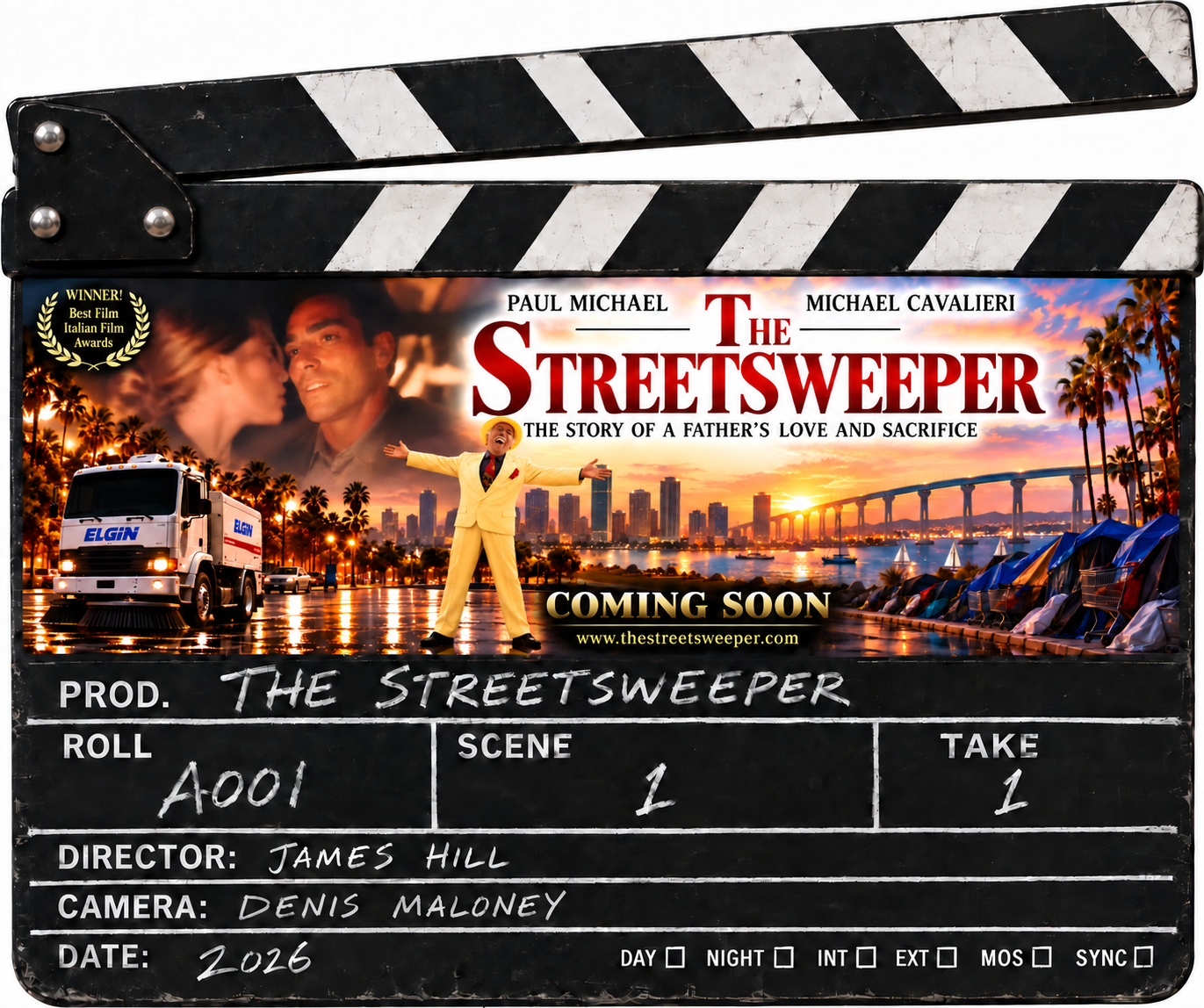
For The Streetsweeper, director James Hill entrusted Maloney with creating the film’s visual identity as Director of Photography. The American Film Institute’s record of the production credits Maloney with the film’s cinematography.
His photography captured not only the performances of the film’s ensemble cast, but also the streets and realities of San Diego at the beginning of the 21st century—images that have taken on extraordinary significance as The Streetsweeper returns nearly a quarter-century later.
Today, those images provide something filmmakers rarely have the opportunity to revisit: San Diego — Then & Now.
As The Streetsweeper is restored and prepared for a new generation of audiences, Maloney’s cinematography becomes a visual bridge between two eras—preserving the city, its people and a story whose themes remain remarkably relevant today.
Film Editor · Television Editor · Post-ProductionSeth Casriel
Seth Casriel
Seth Casriel is a veteran film and television editor whose career spans feature films, documentaries, comedy and some of the most recognizable unscripted entertainment of the past two decades.
Casriel’s feature-film credits include the blockbuster Jackass franchise, where his editorial work helped shape the franchise’s distinctive combination of comedy, action and unpredictable storytelling. His credits include Jackass: Number Two, Jackass 3D and Jackass Presents: Bad Grandpa, as well as Jackass 2.5 and Jackass 3.5.
His television career is equally extensive. Casriel worked as an editor on America’s Funniest Home Videos across dozens of episodes and has contributed to documentary and reality programming including ESPN’s acclaimed 30 for 30 series. His more recent work includes El Titán: The Adrián González Story, while his editorial career has also included projects such as Dumb: The Story of Big Brother Magazine and Bad Trip.
Long before many of those projects, Casriel helped shape a very different kind of film.
As the Film Editor of The Streetsweeper, Casriel worked alongside writer-director James Hill and cinematographer Denis Maloney to assemble the deeply human story of Enzo, Joey and the streets of San Diego. The American Film Institute officially credits Casriel as the film’s editor.
More than two decades later, Casriel has returned to The Streetsweeper as the film is prepared for a new generation.
That makes his connection to the project particularly extraordinary: the editor who helped shape the original film is now helping bring that same story back to the screen nearly 25 years later.
His career since The Streetsweeper has taken him through major theatrical releases, television and documentary filmmaking—but this project represents something different. A lost film. A story rediscovered. And the original editor helping finish what he started nearly a quarter-century ago.
Composer · The StreetsweeperBrahm Wenger
Brahm Wenger
Brahm Wenger is an accomplished film and television composer whose music has accompanied dozens of productions and entertained audiences around the world.
Born in Montreal, Wenger studied at McGill University and later attended USC’s prestigious film-scoring program. After arriving in Los Angeles, he had the opportunity to work with legendary composer Jerry Goldsmith, gaining invaluable experience alongside one of cinema’s most celebrated composers.
Wenger went on to establish an extensive career of his own, composing music for more than 50 film and television projects. Among his most recognizable work is the enormously successful Air Bud franchise, composing music across the Air Bud and Air Buddies films and building an impressive body of family entertainment and television work.
For The Streetsweeper, Wenger did far more than simply provide a score. He helped create part of the film’s musical identity.
Wenger composed the memorable “Walk to Work” theme, giving Enzo’s journey through the streets of San Diego its own musical voice. He also generously provided the production with the “Sweeper Parade” song at no cost, a gesture that reflected both his creativity and his personal commitment to the film.
Those musical elements became part of the personality of The Streetsweeper—supporting a story in which music, opera, Italian heritage, family and sacrifice are woven together.
Nearly 25 years later, Wenger’s music remains an integral part of the film as The Streetsweeper is rediscovered and prepared for a new generation of moviegoers.
His compositions now accompany something few composers ever get to experience: a film and its music emerging from the past to find an entirely new audience.
Bringing the film to audiences.
Meet the team handling publicity, media relations and audience updates.
Executive Producer · Head of Publicity & Media RelationsTony Carro
Tony Carro
Tony Carro serves as Executive Producer and Head of Publicity & Media Relations for The Streetsweeper, helping lead the film’s reintroduction to audiences more than two decades after its original production.
A working actor, producer, and business executive, Tony brings a unique combination of entertainment experience, media relations, strategic marketing, and executive leadership to the project. His involvement with The Streetsweeper extends beyond production—he is helping spearhead the film’s theatrical premiere strategy, publicity campaign, industry outreach, social media presence, and efforts to introduce the film to distributors and audiences nationwide.
Tony was particularly drawn to The Streetsweeper because of its timeless themes of family, sacrifice, homelessness, dignity, and hope. With the film incorporating contemporary 2026 footage alongside its original imagery, he believes its central question—how much has really changed in nearly 25 years?—creates an opportunity for the film to become part of a much larger national conversation.
As an actor, Tony continues to pursue film and television roles while embracing new challenges both in front of and behind the camera. His philosophy is simple: opportunity arrives when preparation, persistence, and hard work have already been put in.
With The Streetsweeper, Tony’s mission is to help ensure that a story once ahead of its time finally reaches the audience it was meant to find.
Digital Media · Marketing · Audience EngagementRoss Stasik
Ross Stasik
Ross Stasik brings a modern digital perspective to The Streetsweeper team, helping introduce the film to a new generation of audiences through social media, digital marketing, and online engagement.
As part of the film’s 2026 release campaign, Ross works closely with the production and publicity team to develop The Streetsweeper’s digital presence across Instagram, TikTok, Facebook, X, and other online platforms. His focus is turning the film’s story, imagery, behind-the-scenes content, and upcoming events into an active and growing conversation with audiences.
Ross also plays an important role in developing the film’s broader online strategy—from strengthening its social channels and website presence to creating campaigns designed to build awareness leading into screenings, premieres, and distribution opportunities.
Combining creativity with an understanding of today’s rapidly changing digital landscape, Ross is helping bridge The Streetsweeper’s original story with the way audiences discover and engage with independent films today.
His mission is straightforward: build the audience, create momentum, and make sure The Streetsweeper gets seen.
Building the film’s world.
Key design credits from the film’s on-screen credits.
Campaign artwork.
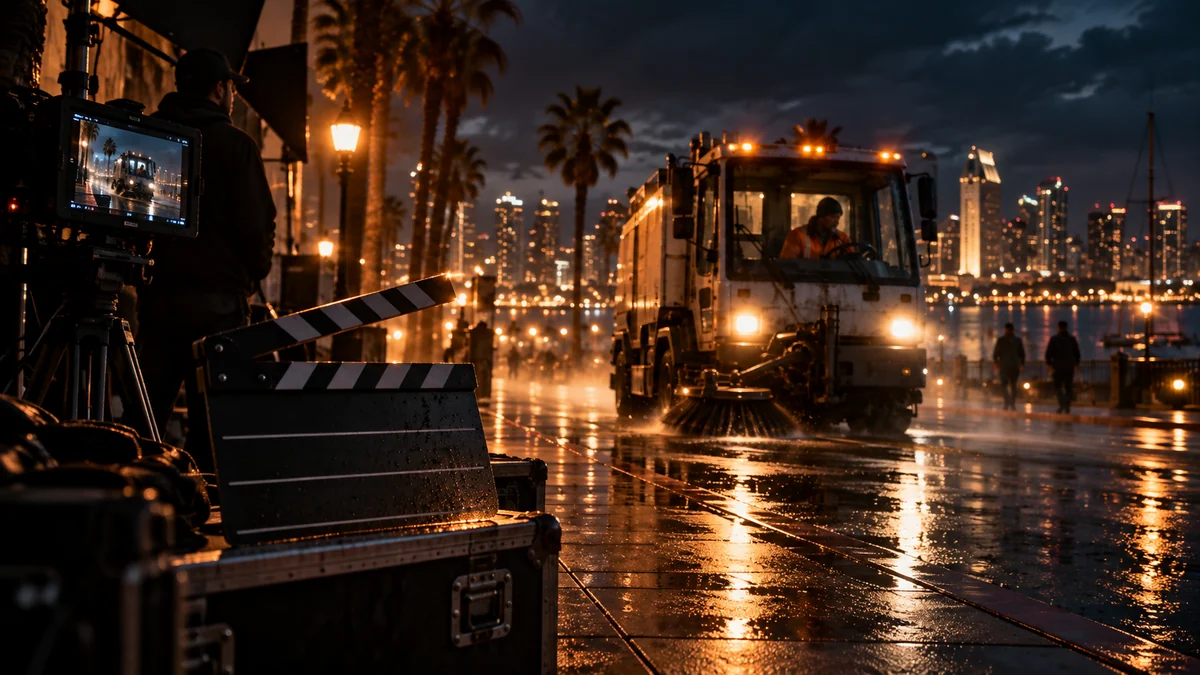
The film’s slate and artwork.
Publicity inquiries.
For interview requests and media materials.
Tony Carro
Executive Producer | Head of Publicity & Media Relations
For interviews, screenings, press materials, community events and distribution inquiries.